


Jura Swan Books
Jura Swan’s Books explore how childhood experience, inherited patterns, and protective fragments continue through the body, relationships, anxiety, and the choices we make. Together, they offer a path from recognition towards inner safety, integration, and a life no longer organised around what once had to be survived.
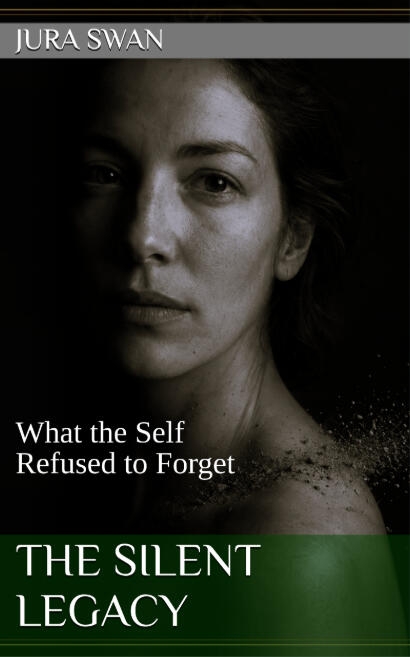
The Silent Legacy explores the emotional inheritances carried through families: silence, loyalty, control, sensitivity, unfinished grief, and responsibilities assumed too early. It reveals how a child may become the one who watches, rescues, succeeds, disappears, or holds the family together—and how these roles can continue long after their original purpose has been forgotten.
This is not a search for blame. It is an invitation to recognise what was carried out of love, belonging, and necessity, so that inheritance no longer has to become destiny. What has passed through generations can be met with consciousness, compassion, and choice.

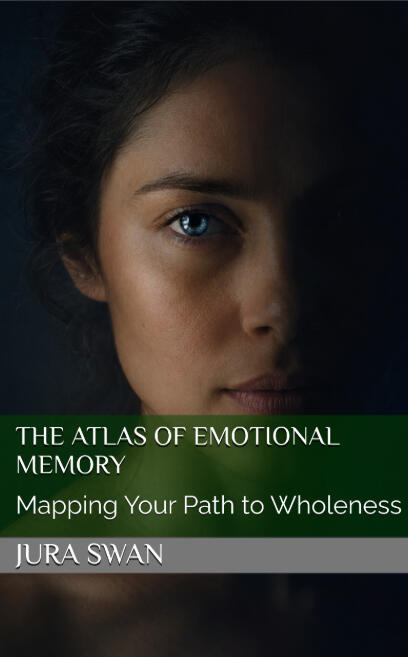
The Atlas of Emotional Memory explores how emotional experience may remain present through bodily responses, relationships, expectations, and protective patterns that begin before deliberate thought. It gives language to the fragments that may form across childhood, adolescence, and adult life when connection, safety, dignity, or belonging appear to be at risk.
Bringing together a detailed fragment atlas and the 11-step Emotional Memory Process™, the book guides the reader from recognition towards a different relationship with what was once divided. The purpose is not to eliminate the protective self, but to allow its intelligence to return to a wider, more integrated life.
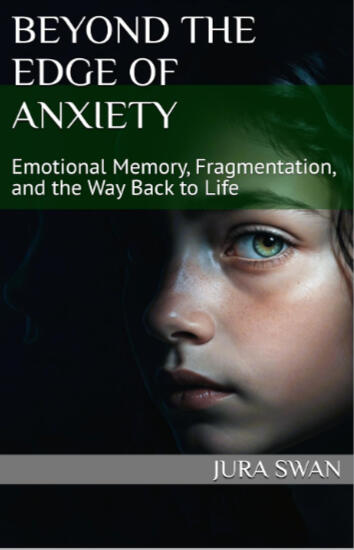
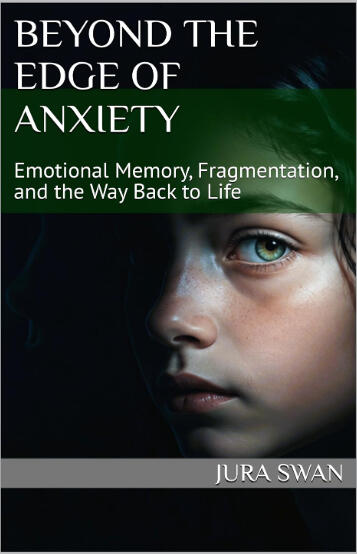
Beyond the Edge of Anxiety traces the hidden architecture beneath anxiety, panic, control, and dissociation. Through the lens of emotional memory, it explores how fragments of the Self may form when a child encounters experiences that are too overwhelming, too lonely, or impossible to change.
What could not be fully held does not simply disappear. It may remain as vigilance, anticipated separation, the need to control, or the protection of becoming absent from one’s own experience. This book offers another possibility: that the frightened fragment no longer has to carry its experience alone.
THE INTELLIGENCE WITHINFragment × Animal ArchetypesThere is another way to meet the parts of ourselves that learned to protect us.The Intelligence Within explores emotional fragments through animal archetypes — not as symbols of the wound, but as expressions of the intelligence that existed beneath the protection.

ABOUT MEI began to write because certain questions would not leave me.
As a psychodynamic therapist, and a mother of five, I have spent many years listening to what remains beneath the life visible from the outside—emotional memories, inherited patterns, and the protective parts of the Self that learned to survive in silence.
My books give language and structure to these inner landscapes.
At the heart of everything I create is one quiet belief:
We are always greater than any wound, pattern, diagnosis, or story told about us.
Healing is about remembering the life we once had to conceal.
You are invited to continue in the way that feels closest: through the pages of the books, the atmosphere of the songs, or simply a quiet moment of recognition.
There is no single path back to oneself.Jura Swan
The Emotional Memory Process
A body-centred path from emotional activation towards integrationWhat is activated in the present does not always begin there. A moment of distance, criticism, closeness, uncertainty, or loss may awaken a response that feels greater than the event itself. The body changes before reflection is complete, carrying us towards an older experience of danger, separation, or powerlessness.The Emotional Memory Process™ is an eleven-step, body-centred framework that follows this sequence from the present trigger into bodily sensation, emotional memory, and the protective fragment that once formed when no adequate response was possible.A fragment is not a broken part to be removed, but an intelligent adaptation that helped the person endure, preserve connection, or remain safe. The purpose of the process is not to erase the past, but to bring what was once left alone into relationship with the resources, choices, and Adult Self available now.
PART 1 — BEGINNING WITH THE PRESENTRecognising the event and listening to the bodyThe process begins with something that is happening now. We slow the moment down and notice what occurred before interpretation took over: what was said, withheld, changed, delayed, lost, offered, or demanded—and what followed immediately within the person.Attention then moves from the story into the body. Pressure, heat, cold, contraction, numbness, trembling, altered breath, pain, heaviness, restlessness, or an unexpected absence of sensation may reveal the response before language can explain it.The task is not to decide whether the reaction is reasonable. It is to recognise its sequence: what happened, what the body registered, what impulse appeared, and which certainty about safety arrived before conscious thought.
PART 2 — FOLLOWING EMOTIONAL MEMORYApproaching the source without forcing remembranceThe present sensation is gently allowed to open towards an earlier experience. Emotional memory may appear as a scene, an age, a phrase, a posture, an atmosphere, an image, or simply the feeling that this moment has been lived before.No memory is forced, and the process does not search for the most dramatic event. It follows the nearest accessible point of resonance—the place where the same combination of feeling, bodily response, and impossibility may first have become necessary.The original conditions are then recognised with care. What did the child or earlier Self need? What could the environment provide, and what remained unavailable? Validation does not require blame or a final verdict about every person involved. It allows the experience to be understood according to how it was lived, so that the protective response no longer has to keep proving that something mattered.
PART 3 — RESTORING WHAT WAS INTERRUPTEDMeeting the response and need that could not be completedEvery emotional conflict contains a movement. The person may have wanted to protest, run, push away, call for help, reach for comfort, speak, cry, protect someone, refuse, or become still until danger passed. When that movement could not safely occur, its direction may remain held within the body and continue shaping present behaviour.Within the process, the interrupted response is allowed to become known without reenacting the original event. It may emerge through language, imagery, posture, breath, or a small movement that the body was once unable to complete.Beneath the protection, an unmet need may also become visible: safety, witness, comfort, information, distance, repair, play, rest, choice, or the right to remain a child. Some of these needs can be answered in the present through boundaries, relationship, practical support, or Adult Self action. Others cannot be fulfilled retroactively and need to be grieved.The past is not rewritten. What changes is that the fragment no longer has to remain alone with what happened.
PART 4 — ALLOWING COMPLETION AND NEW POSSIBILITYHelping the body recognise what is available nowEmotional completion is not forced release, dramatic catharsis, or the removal of feeling. It may arrive quietly—as warmth, tears, trembling, a deeper breath, anger finding language, grief becoming possible, or urgency beginning to soften.The measure of the process is not emotional intensity. It is whether the person can remain connected to the present, retain choice, and return to ordinary orientation afterwards.From here, attention turns towards what exists now that did not exist within the original experience: time, distance, language, knowledge, physical strength, supportive people, medical or professional care, legal rights, financial resources, or the ability to leave, return, refuse, and choose.New possibility becomes believable through lived evidence. A boundary is spoken and connection survives. Help is received without hidden debt. Rest occurs and life does not collapse. The body begins to register that the present may contain more than the options once available.
PART 5 — INTEGRATING PROTECTIVE INTELLIGENCEAllowing capacity to remain without the old emergencyThe final movement approaches the fragment not as sabotage, but as intelligence.Vigilance may have anticipated danger. Invisibility may have preserved belonging. Achievement may have secured recognition. Numbness may have made the unbearable survivable. Control may have created order where no dependable protection existed.Recognising this intention does not deny the cost of the pattern. A protection can be honoured while also being released from work it no longer needs to perform.Many adaptations contain genuine capacities: perception, endurance, precision, loyalty, relational sensitivity, discipline, imagination, or the ability to act in crisis. Integration separates these qualities from the fear that made their constant use compulsory. What belongs to the person can remain; what belonged to the old emergency no longer has to govern every present moment.The process concludes through acknowledgment—not gratitude for harm, premature forgiveness, or the demand for a beautiful ending, but a more truthful inner recognition:This happened.
It mattered.
My response helped me continue.
I can honour what protected me without asking it to govern my life now.



SAFETY WITHIN THE PROCESSSafety is not a preliminary exercise placed before the real work. It is part of every movement.The person retains the right to pause, open their eyes, move, return to the present, decline an interpretation, or decide that the exploration should not continue alone. The process may return to an earlier step, remain with bodily orientation, or pause while a present situation requires practical action.The Emotional Memory Process™ does not demand the recovery of every memory or the completion of all eleven movements in one session. The process serves the living person; the person does not serve the process.Emotional inquiry also does not stand in opposition to medical, psychiatric, or psychological care. The body, emotional meaning, appropriate assessment, and professional support can be held together as different dimensions of the same human reality.
AN INVITATIONIf a present response feels older than the situation that awakened it—if the body continues preparing for a danger that may already have ended The Emotional Memory Process™ offers a way to approach that response with precision, safety, and respect.The way forward does not begin by defeating the part that learnt to protect you.It begins when that part no longer has to carry its experience alone.
Jura Swan Lyrics
Jura Swan Lyrics is a collection of original songs shaped by emotional memory, archetypal imagery, and the quiet movement of returning to oneself. Moving through ashes, silence, water, stone, moonlight, and flame, the songs enter the places where experience remains present long after words have ended.
Each song carries a different passage of the inner journey: the release of what has been survived, the recognition of what was never truly lost, and the gradual discovery that safety, belonging, and light may also be remembered from within.
These are not songs about escaping darkness. They listen for what the darkness has protected. Through intimate vocals, spacious atmosphere, and recurring images of breath, rain, lanterns, and open hands, Jura Swan Lyrics gives musical form to the same inner territories explored in Jura Swan’s books.


Explore the process through the Books
A more detailed exploration of emotional fragments, their protective intelligence, and the eleven movements of The Emotional Memory Process™ can be found within my books.The Atlas of Emotional Memory presents the complete practical architecture of the process, including fragment recognition, safety, body awareness, and the Body–Conflict Atlas.
The Silent Legacy follows the inherited patterns that may pass quietly through families, while
Beyond the Edge of Anxiety enters more deeply into anxiety, panic, control, and dissociation.Each book offers a different entrance into the same inner territory: understanding what the body and emotional life continued to carry when an experience could not yet be fully met.
Thank you for entering this space.Whatever brought you here, I hope you leave with one quiet recognition: nothing within you came into being without a reason, and no part of you was ever meant to carry its story alone.With warmth,
Jura Swan
STAY CONNECTED